
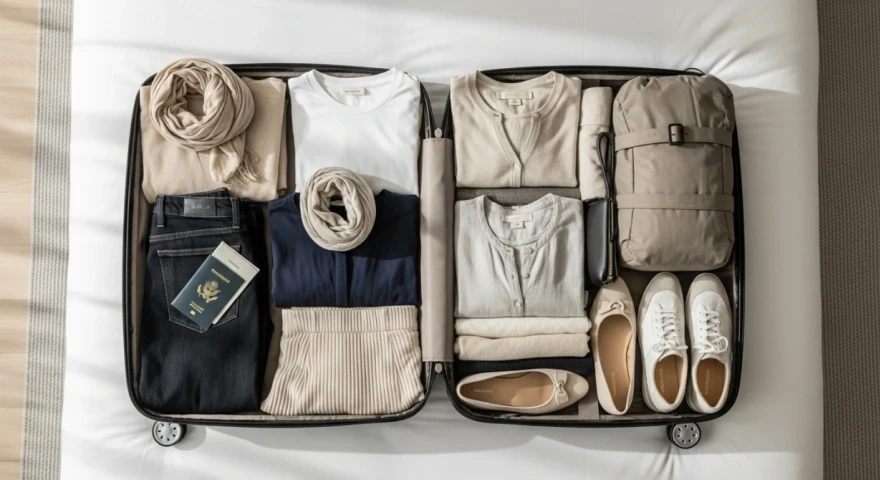
How to Build a Capsule Wardrobe for Travel That Works Anywhere in the World
You know the scene. You drag an overstuffed suitcase across a cobbled street, open it in the hotel, and realize half of what you packed does not actually go together. You still have “nothing to wear” even though you brought everything. That is the exact packing trap a solid capsule wardrobe solves.
Travel is more flexible than ever, with trips that jump from city meetings to mountain trains to beach dinners. Outfits have to adapt just as quickly. A well-planned set of mix-and-match pieces removes guesswork, keeps your bag light, and still lets you feel like yourself wherever you land.
Instead of starting from a Pinterest-perfect grid, start from reality: where you are going, what you will do, and what you truly wear at home. Then build a compact, versatile set of clothes, bags, and smart gear that works in any climate shift or culture change.
🧭 When a travel capsule wardrobe is the right choice (and when it is not)
Before you start pulling clothes from your closet, make sure a capsule approach fits your trip. This workflow is powerful, but it is not ideal for every single journey.
When you should use this workflow
- Multi-stop trips: You are visiting several cities or countries with different dress codes and need outfits that shift from casual sightseeing to smarter dinners.
- Carry-on or lightweight travel: You want to move easily with one suitcase and maybe a compact travel rucksack instead of checking bulky luggage.
- Repeat-wear tolerance: You are comfortable re-wearing base pieces and changing looks with layers, shoes, and accessories.
- Limited laundry access: You expect only basic washing options, so you need quick-drying, crease-resistant fabrics.
When this workflow is not ideal
- Highly specialized trips: You are going on an expedition, formal event, or sports-focused holiday that demands technical or formal gear outside normal clothing.
- Strict uniforms or dress codes: Work assignments that require uniforms or very specific outfits may leave too little room for modular mixing.
- Style experimentation holidays: If your goal is shopping, fashion exploration, or trying bold trends, a tight capsule will feel limiting.
If your trip matches the first group more than the second, continue. You will save both space and decision fatigue by designing a clear, modular wardrobe.
📝 Preparation: what you must decide before choosing a single item
The most common mistake is jumping straight to packing lists without defining constraints. Spend 15–20 minutes getting specific about your trip and your preferences.
1. Lock in your trip profile
- Climate and season: List the real temperatures and conditions you expect, including evenings. “Spring in Europe” can mean warm afternoons and near-winter nights.
- Activity mix: Estimate your day types. For example: 50% casual walks and museums, 30% smart casual dinners, 20% work meetings.
- Cultural norms: Note if you will visit religious sites or conservative regions that require covered shoulders or knees.
2. Choose a tight color palette
Select two or three base neutrals, then one or two accents. Neutrals such as black, navy, gray, or beige form the backbone. Accent colors can be things you already love wearing, like olive, rust, or a soft blue.
Every top should work with every bottom within this palette. If a piece only matches one other item, treat it as a red flag.
3. Set a strict item budget
Decide the number of pieces before picking them. For many one-to-two-week trips, a practical range looks like:
- Tops: 5–7 (blend of casual and smart-casual)
- Bottoms: 3–4 (at least one that can be dressed up)
- Layering pieces: 2–3 (cardigan, light sweater, or blazer depending on climate)
- Dresses/jumpsuits (optional): 1–2 that transition day to night
- Shoes: 2–3 pairs across walking, smart, and maybe sandals
Having numeric limits forces you to prioritize multi-use pieces instead of “just-in-case” items.
4. Decide your luggage and bags
Your bag choice shapes how small your capsule should be. If you want hands-free mobility in cities and airports, pair a compact suitcase with a streamlined backpack. For example, a Bange 6801 or BG6800 backpack keeps travel documents, laptop, and daily essentials organized without feeling bulky.
Crossbody bags or long-strap options work well for city days and short outings because they keep valuables close while still looking polished. For longer trips with more electronics, a business-style pack such as the Arctic Hunter or Bange laptop models helps separate work gear from clothes.
🧩 Step-by-step: building a capsule wardrobe that works anywhere
Once your constraints are clear, you can build the capsule in a simple sequence. Follow these steps in order and avoid backtracking unless something clearly fails a test.
Step 1: Start with footwear and outer layer
Shoes and outerwear are the hardest to replace on the road and take the most space. Lock these first so all other items support them.
- Pick your main walking shoe: Choose a neutral pair that you can wear all day with jeans, trousers, or casual dresses.
- Add one elevated option: A simple loafer, low heel, or clean sneaker that works for dinners and more polished settings.
- Outer layer: Select one jacket or light coat that works across climates you will meet and fits over every top you plan to pack.
Check that both shoes match your chosen color palette and feel comfortable for long days, not just short events.
Step 2: Lock your bottoms
Choose three to four bottoms that cover your activity range.
- Foundation bottom: One pair of neutral trousers or dark jeans that work with every top and both pairs of shoes.
- Comfort piece: One more relaxed bottom such as lightweight pants or soft jeans for travel days and casual walks.
- Smart or climate-specific option: A midi skirt, tailored pants, or linen trousers that suit dinners, meetings, or hot days.
Lay these out on your bed. Anything that only matches some tops later will disrupt your mix-and-match logic.
Step 3: Choose tops with a dress-up / dress-down balance
Use your activity mix to decide how many casual versus elevated tops you need. Keep each top thin enough to layer under your outerwear and at least one knit.
- Everyday base tops: Two or three simple t-shirts or long sleeves in neutrals that go with all bottoms.
- Smart-casual pieces: Two or three blouses or shirts that can handle both meetings and restaurants.
- Statement or accent items: One or two tops in your accent color or interesting texture to add personality.
Quick-drying, wrinkle-resistant fabrics that breathe well let you wash items in a sink at night and wear them again the next day, which sharply reduces how much you have to pack.
Favor these fabrics for at least half your tops so you can rotate them without worrying about long drying times.
Step 4: Add strategic one-piece outfits
Dresses and jumpsuits are optional but powerful in a capsule because one garment equals a full look.
- Day-to-night dress: A simple, knee- or midi-length option in a neutral or subtle print that works with your walking shoes and your smarter pair.
- Relaxed one-piece: A jersey dress or soft jumpsuit that is comfortable for travel days but can be sharpened with a belt or accessories.
Make sure outerwear layers cleanly over each one-piece so you are not stuck with a dress that only works in warm weather.
Step 5: Choose layers that extend your climate range
Two or three layers can transform the same base pieces for different weather or formality levels.
- Light knit or cardigan: Neutral, hip-length, and slim enough to go under your main jacket.
- Structured layer: A soft blazer or smarter cardigan that instantly elevates jeans and a tee.
- Optional warm layer: For shoulder seasons, a second knit for cooler evenings.
If you expect both warm and cool destinations, prioritize thin but warm fibers that layer instead of one heavy, bulky piece.
Step 6: Select accessories that define your style
Accessories take little space and give your compact wardrobe character.
- Belts: One simple belt that works with trousers and over dresses to change silhouettes.
- Jewelry: A small set of pieces you already wear frequently at home.
- Scarves: One light scarf for warmth, modesty in religious sites, or as an accent color.
- Day bag: Pick between a crossbody, small shoulder bag, or a compact everyday rucksack depending on your plans and security preferences.
Keep metals and colors consistent so you can combine everything freely without clashing.
Step 7: Add organizational tools and travel extras
To keep your capsule wardrobe functional inside a suitcase, invest in simple organizers and smart gear. A good clothing organiser for suitcase use lets you group outfits or categories and reduces wrinkles. Lightweight cubes with multiple compartments help separate clean and worn items.
Compact cases for toiletries, hand luggage accessories, and small rucksacks from the Travel Accessories range can keep documents, gadgets, and cosmetics under control without taking over your bag.
📊 Example capsule combinations for common trip types
Use these realistic scenarios as templates rather than rigid rules. Adjust quantities to your trip length and whether you will have laundry access.
1. One-week city break with a side trip to the coast
- Footwear: Neutral walking sneakers, low-profile smarter shoes, simple sandals if weather allows.
- Bottoms: Dark jeans, lightweight trousers, casual shorts or a relaxed skirt for warmer days.
- Tops: Three casual tees, two smart-casual blouses.
- Layers: One light knit, one unstructured blazer or shirt jacket.
- One-piece: One versatile midi dress.
This covers museum days, train rides, seaside walks, and dinners without overspecializing. The dress plus blazer and smart shoes handles most restaurants that expect slightly elevated looks.
2. Ten-day work-and-leisure trip
- Footwear: Polished low-profile shoes, all-day walking shoes.
- Bottoms: Two pairs of tailored trousers, one pair of dark jeans.
- Tops: Two button-down shirts, three blouses, two soft tees for off-hours.
- Layers: One blazer, one fine-gauge sweater.
- One-piece: One work-appropriate dress.
Pack your laptop and documents in a structured backpack such as a Bange 6801 or Arctic Hunter business model so work gear is separated from clothes. Your suitcase holds a simple, business-leaning capsule that still works for off-duty exploring.
🧪 Verification: how to check that your capsule actually works
Before you zip your bag, stress-test your choices. This quick verification step saves you from discovering gaps on day three of your trip.
1. Outfit math and mix-and-match test
- Bottoms-to-tops ratio: Each bottom should pair with at least three tops and one layer.
- Footwear coverage: Every outfit should work with at least one pair of shoes, and most with both.
- Event coverage: List your trip events and match at least one complete outfit to each, including shoes and outerwear.
If any activity lacks a clear outfit, solve that before packing by swapping a piece rather than adding extras.
2. Flat-lay and try-on check
Lay outfits on your bed in clusters: travel days, active sightseeing, work, dinners, and potential bad-weather days. Then try on at least three full looks you expect to wear most often.
- Comfort: You should be able to sit, walk, and climb stairs easily in each outfit.
- Confidence: If you feel “off” in a piece at home, it will not improve on the road. Remove it.
3. Fabric and laundry reality check
Look at care labels. For longer trips, most tops and underwear should be washable in a sink and dry overnight or within a day. Heavy cotton that takes two days to dry can become a bottleneck.
Plan to rotate quick-dry pieces more often, and keep one or two slightly heavier items for cooler evenings or flights.
🧯 Fallbacks: what to do if parts of your capsule fail
Even a well-planned wardrobe can misfire. Here is how to adapt quickly without blowing up your luggage.
Fallback 1: You underpacked for cold weather
- Layer what you have: Wear a tee, shirt, and knit together under your jacket.
- Add one versatile warm piece: Buy or borrow a single extra sweater or thin thermal layer locally rather than multiple items.
Prioritize something that works over all your tops so it earns daily use rather than becoming a one-off purchase.
Fallback 2: You feel too casual for local norms
- Use accessories: Add a belt, jewelry, and your smartest shoes to sharpen jeans and a simple top.
- Buy a single polish piece: A neutral blouse or scarf that suits your palette can instantly upgrade what you already packed.
Stick to something you would also wear at home so you are not carrying dead weight on future trips.
Fallback 3: You brought too much
- Repack mid-trip: Rebuild your capsule around three bottoms and five or six tops, then push extra items to the bottom or a separate cube.
- Ship home or donate: For long journeys, consider mailing low-value, low-use pieces home or donating them if they no longer fit your needs.
This lightens your load and lets you move closer to a true capsule without wasting money already spent.
🧺 How to pack your capsule so it stays usable
A great capsule can still become chaos inside your suitcase if you pack it poorly. Structure is what keeps outfits easy to access on the road.
Use organizers to create “drawers” in your suitcase
Think of your bag as a small chest of drawers. A good set of organizers lets you separate categories and outfits so you do not unpack everything at each stop.
- By outfit: Pack three or four complete outfits per cube. This works well for short trips.
- By category: Tops in one, bottoms in another, underwear and sleepwear in a third.
- By cleanliness: Start the trip with one cube empty to hold worn clothes as you go.
Suitcase organizers with multiple compartments are especially useful when you move accommodations often, because you can quickly pull out exactly what you need without digging.
Roll vs fold for a travel capsule
For many capsule wardrobes, a hybrid approach works best.
- Roll: Soft tees, casual dresses, and knitwear that do not crease badly.
- Fold: Structured shirts, tailored trousers, and blazers to reduce sharp wrinkles.
Place folded items in organizer sections closer to the top so you can unpack or hang them immediately on arrival.
Keep essentials in your personal bag
Use a small backpack like the Bange BG6800 or BG7529 as your under-seat bag. Pack a full spare outfit, basic toiletries in travel bottles, medications, and valuables here.
If your main luggage is delayed, you still have at least 24 hours of clothing and essentials to bridge the gap without stress.
📦 Comparing backpack options for a capsule-focused trip
Choosing the right backpack helps your capsule wardrobe stay accessible and secure. Below is a simple comparison of several practical models.
| Model | Approx. use case | Size focus | Best for |
|---|---|---|---|
| Bange 6801 14-Inch | Compact laptop and essentials | Smaller footprint | Minimal tech, city days |
| Bange 6801 15.6-Inch | Larger laptop plus accessories | More device room | Work trips with more tech |
| Bange BG6800 | Balanced daypack | Medium capacity | Daily sightseeing and commuting |
| Bange BG7529 | Casual, lightweight pack | Light carry | Short outings and hands-free travel |
Match your pack to your typical load. If you carry only a tablet and small camera, a smaller model is more comfortable than a large, under-filled bag.
🧵 Fabric choices and their role in a global-ready wardrobe
The right fabrics keep your capsule comfortable and easy to maintain across climates.
| Fabric type | Wrinkle behavior | Drying speed | Best use in capsule |
|---|---|---|---|
| Blended synthetics | Resist creasing | Very fast | T-shirts, travel dresses, active layers |
| Cotton blends | Moderate wrinkles | Moderate | Casual shirts, everyday pants |
| Linen blends | Intentional, soft wrinkles | Fast | Hot weather bottoms and shirts |
| Fine knits | Minimal if folded well | Average | Layering sweaters and cardigans |
Use quicker-drying, low-crease fabrics for the items you plan to wash and wear most. Reserve higher-maintenance fabrics for the few pieces that matter most for style or formality.
🧠 Practical tips that make any capsule work harder
- Plan outfits, not items: When you add a piece, immediately name three outfits that include it. If you cannot, it probably does not belong.
- Stick to one metal color: Choose either silver-toned or gold-toned hardware and jewelry so everything coordinates seamlessly.
- Limit prints: Use prints sparingly, ideally on one or two items that match all your neutrals.
- Check laundry access: If your accommodation has machines, you can safely cut one or two tops from your list.
- Take test photos: Photograph yourself in your main outfits. It is easier to spot what feels “off” on camera than in a mirror.
🚫 Common mistakes when building a travel capsule
A few recurring errors make capsules less useful than they should be. Avoid these and you will get closer to a truly universal wardrobe.
- Over-indexing on “travel clothes” only: Overly technical or obviously sporty items can look out of place in cities and restaurants. Balance comfort with pieces you already wear at home.
- Ignoring footwear reality: Packing shoes that are not broken in, or that only match one outfit, can derail your whole plan.
- Too many “just in case” pieces: If something solves a rare scenario but does not work daily, consider renting or buying locally if that scenario actually happens.
- Unproven new clothes: Brand new, never-worn items might rub, stretch, or crease badly. Test them for a full day at home first.
✅ Conclusion: a small wardrobe that does big work
A great capsule wardrobe for travel is not about owning special “travel clothes.” It comes from a clear trip profile, a tight color palette, and a limited set of versatile, well-chosen pieces that work together.
Start with shoes and outerwear, then build around mix-and-match bottoms, practical tops, and a few layers. Use organizers and a well-sized backpack to keep everything accessible and crease-free. Do a final verification pass before you leave so every activity on your itinerary has at least one complete outfit ready.
With a little upfront planning and the right travel gear from threebirds, your suitcase becomes lighter, mornings become simpler, and your outfits stay reliable from check-in to your flight home.
When you are ready to refine your own setup, let threebirds help with luggage and accessories that support a smarter way to pack.
How many pieces should a travel capsule wardrobe include for a week-long trip?
For most one-week trips, 5–7 tops, 3–4 bottoms, 2–3 layers, and 2–3 pairs of shoes are usually enough if everything mixes and matches.
What is the best way to check if all my travel outfits work together?
Lay outfits out by activity, then try on at least three full looks. Every bottom should work with most tops and at least one pair of shoes.
How do I choose between different backpack sizes for my trip?
Match your backpack to what you actually carry daily. Smaller models suit light tech and essentials, while larger laptop packs fit more devices and documents.
Which fabrics are most practical for a global travel wardrobe?
Look for quick-drying, wrinkle-resistant blends for frequently worn tops, and use cotton or knits where comfort matters more than drying speed.
How can I prevent my capsule wardrobe from becoming a mess inside the suitcase?
Use organizers to separate categories or full outfits, and combine rolling for soft items with folding for structured pieces.
What should always go in my personal bag rather than checked luggage?
Pack a complete spare outfit, key toiletries, medications, valuables, and important documents in your under-seat backpack.
What if I realize mid-trip that I packed too many clothes?
Rebuild a smaller capsule from what you have, move extra pieces to a separate organizer, and consider mailing or donating items you never use.
Can a travel capsule wardrobe still look stylish and personal?
Yes. Use a tight neutral base and add personality through a few accent colors, prints, and accessories that reflect your usual style.
 Travel Accessories Worth Packing in 2025: Essentials That Truly Upgrade Every Trip
 The Environmental Impact of Fast Fashion Luggage and How to Choose Better