
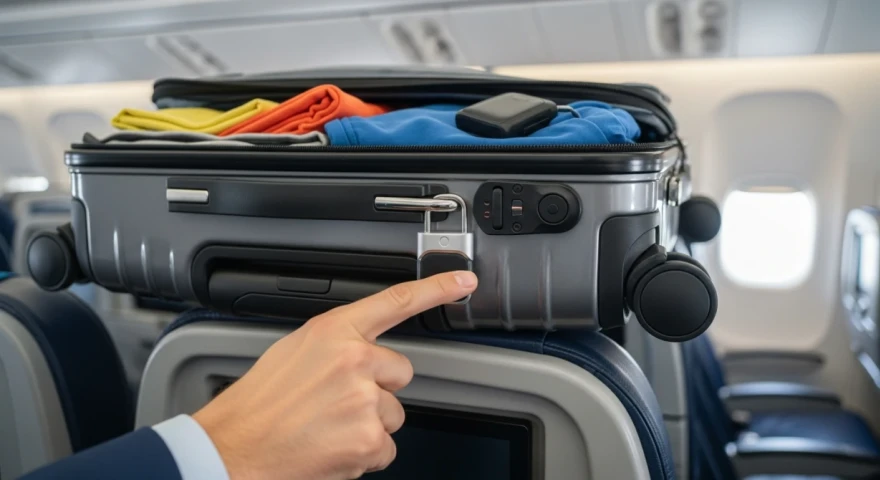
How to Keep Your Luggage Safe on Flights: What Airlines Won't Tell You
Keep valuables and spare batteries in your cabin bag, label checked luggage clearly, remove snag risks, and use organizers, covers, or straps to reduce damage, delays, and carousel mix-ups.
The bag that causes trouble is usually not the expensive one. It is the one packed in a rush, tagged poorly, or stuffed with items that should never have left your sight. When airports are busy, small packing mistakes turn into delays, damaged zippers, missing chargers, and long recovery calls.
The practical fix is not complicated. Protect what matters most, make your bags easier to identify, and build a simple preflight check that separates must-do steps from optional extras. That is where smart travel accessories and disciplined packing make a real difference.
🧭 Set the goal before you zip the bag
Your goal is not perfect security. It is a bag setup that lowers the chance of loss, damage, mix-ups, and screening problems while keeping essential items available if checked baggage is delayed.
Use measurable readiness criteria before leaving home. If a bag fails even one no-compromise check, it is not ready for the airport.
- Identity: Every checked piece has your name, phone number, and email attached in a readable label.
- Separation: Valuables, critical items, fragile pieces, and irreplaceable items stay out of checked baggage.
- Battery safety: Spare lithium batteries and power banks are packed in the cabin bag, never in the hold.
- Handling safety: Loose straps and hooks are removed from checked garment bags so they do not catch during processing.
- Access: Travel documents, medicines, chargers, and toiletries are reachable without opening your main checked case.
| Readiness check | Go signal | No-go signal |
|---|---|---|
| Bag identification | Clear contact details attached | No label or only a name |
| High-value contents | Kept in cabin bag | Packed in checked bag |
| Spare batteries | Stored in carry-on | Placed in checked baggage |
| Outer attachments | No dangling hooks or straps | Loose parts can snag |
| Fast access items | Grouped in a small organizer or backpack pocket | Scattered across multiple bags |
✅ Sort your protection steps by priority
Most people overinvest in one visible feature, usually a lock, and ignore the steps that prevent the most common problems. Start with priority buckets. A lock can help, but it will not fix poor labeling, weak organization, or a bad decision about what goes into the hold.
Must-do
- Label checked bags clearly: Add name, phone number, and email so a delayed bag can be traced back to you faster.
- Keep essentials in the cabin: Passports, wallet, medication, keys, work devices, and anything fragile should stay with you.
- Move spare batteries to your cabin bag: This includes power banks and loose lithium cells.
- Use a visible bag marker: A suitcase cover, luggage tag, or strap helps you spot your case quickly and reduces carousel mix-ups.
- Organize by category: Clothes organizers keep items contained, reduce rummaging, and make post-screening repacking easier.
Should-do
- Choose a structured personal bag: A compact backpack such as the Bange 6801 14-Inch Laptop Backpack or the Bange 6801 15.6-Inch Laptop Backpack keeps documents and electronics in predictable pockets.
- Use a lock on checked baggage: It is a deterrent, not a guarantee, but it can stop casual opening during transit.
- Pack toiletries in travel bottles: This keeps cabin screening simpler and avoids loose items leaking onto clothing.
- Use a suitcase scale before leaving: Prevents a rushed repack at the counter, which is when valuables often end up in the wrong bag.
Nice-to-do
- Add a suitcase cover: It helps protect the exterior from scratches and makes your case easier to recognize.
- Carry comfort items in your cabin bag: A neck pillow, sleep mask, or earplugs can keep you from opening overhead luggage repeatedly during the flight 😴
- Use a second organizer for documents and gadgets: This cuts down on loose items under the seat and at security trays.
| Priority | Best items to use | Main benefit | What it prevents |
|---|---|---|---|
| Must-do | Tags, organizers, visible markers | Recovery and fast identification | Lost-item confusion, carousel mistakes |
| Should-do | Locks, travel bottles, suitcase scale, structured backpack | Cleaner handling and fewer rushed errors | Forced repacking, accidental damage, messy access |
| Nice-to-do | Suitcase cover, comfort accessories | Extra protection and easier travel flow | Surface scuffs, constant bag opening |
⏱️ Use the right timing window for each action
Bag safety improves when each step is done at the right moment. Last-minute packing creates weak decisions, especially around batteries, valuables, and quick-access items.
- The night before: Separate cabin essentials from checked items. Put chargers, documents, medication, and spare batteries into your personal bag first.
- Before closing checked baggage: Remove loose straps or hooks from garment bags and confirm that no fragile or irreplaceable item remains inside.
- Before leaving for the airport: Attach labels, fit the suitcase cover if you use one, and check weight with a suitcase scale.
- At the terminal: Keep your phone, wallet, passport, and boarding materials in one consistent front pocket or organizer so they never touch the check-in counter.
- At the gate: Reconfirm that your power bank and any spare lithium batteries are still in your cabin setup, not in a checked side pocket.
| When | Action | Why timing matters |
|---|---|---|
| Night before | Separate essentials and valuables | Stops accidental check-in of critical items |
| Before bag closure | Check for loose hooks, fragile contents | Reduces handling damage |
| Before departure | Add label, cover, scale check | Avoids airport repacking |
| At terminal | Keep documents in one organizer | Prevents tray and counter losses |
| At gate | Verify battery placement | Avoids a final compliance mistake |

🛡️ Know the risk controls airlines rarely explain clearly
Airlines move a huge volume of bags, but they do not pack yours. The biggest risks come from how your case is handled, screened, and identified, not from dramatic theft scenarios.
Luggage protection covers are allowed on both carry-on and checked bags, but if additional screening is needed, officers may need to remove them.
That detail matters because some travelers treat a cover as a sealed defense. It is not. Think of it as surface protection and a visual marker, not a substitute for smart packing.
- Risk control for mix-ups: Use a distinctive cover, tag, or strap so another passenger does not grab a similar case.
- Risk control for inspection: Pack in layers with clothes organizers so security checks do not turn your bag into a loose pile.
- Risk control for electronics: Put work devices and charging gear in a structured backpack instead of burying them in checked luggage.
- Risk control for rough handling: Keep hard edges and fragile items out of checked baggage entirely.
- Risk control for counter chaos: Use carry-on accessories that hold documents and toiletries in fixed places, not loose side pockets.
A strong setup is simple to inspect and simple to repack. That is why compact organizers, visible tags, and a reliable personal bag often do more than expensive add-ons.
Two realistic cases
A traveler checks a plain black suitcase with no visible marker and keeps a charger, backup battery, and medication inside it. The bag arrives late. The traveler now has a practical problem that could have been avoided by moving critical items into the cabin bag and adding clear contact details to the checked case.
Another traveler uses clothes organizers, labels the bag, removes loose garment-bag hardware, and carries electronics in a Bange BG6800 Backpack. After extra screening, repacking is quick, nothing spills, and the checked case is easy to identify on the carousel.
📋 Go or no-go checklist before you leave home
This final screen should take two minutes. If any must-do item fails, pause and fix it before the trip starts.
- Go: Checked bags have readable contact labels.
- Go: Valuables, critical items, fragile belongings, and irreplaceable pieces are in your cabin setup or staying home.
- Go: Spare lithium batteries and power banks are in the cabin bag only.
- Go: Loose hooks and straps are removed from checked garment bags.
- Go: Toiletries, documents, and tech are grouped in organizers or dedicated backpack compartments.
- Go: Your case has a visible identifier such as a cover, strap, or tag.
- No-go: You are relying on a lock alone to protect items that should not be checked.
- No-go: You still need to repack at the airport because weight, access, or battery placement is unresolved.
The safest flyer is rarely the one with the most gear. It is the one with a clean packing system, visible identification, and a clear cutoff between what can be checked and what must stay close. If you want luggage accessories that support that kind of discipline, threebirds offers practical bags and travel accessories built for organized trips ✈️
Keep the system simple: identify the bag, protect the contents that matter, and remove preventable handling risks before you leave. Most flight baggage problems start long before the check-in desk. When your setup passes a real go or no-go check, you travel with fewer weak points and fewer surprises.
Are suitcase covers allowed on flights?
Yes. They can be used on checked and cabin bags, but they may be removed if extra screening is required.
What should never go into checked baggage?
Keep valuables, fragile items, irreplaceable belongings, and critical daily essentials with you instead of putting them in the hold.
Why is a bag label more important than many travelers think?
A readable label with your name, phone number, and email gives delayed baggage a much better chance of being matched back to you.
Where should I pack a power bank or spare lithium battery?
Store both in your cabin bag. Do not place loose lithium batteries in checked baggage.
Do organizers actually help with bag safety?
Yes. They keep contents grouped, reduce mess after inspection, and make it easier to notice if something is missing.
What is the point of a visible strap, tag, or cover?
It helps you recognize your case quickly and lowers the chance that someone else picks up a similar-looking bag.
 How to Build a Capsule Wardrobe for Travel That Works Anywhere in the World
 Travel Accessories Worth Packing in 2025: Essentials That Truly Upgrade Every Trip