
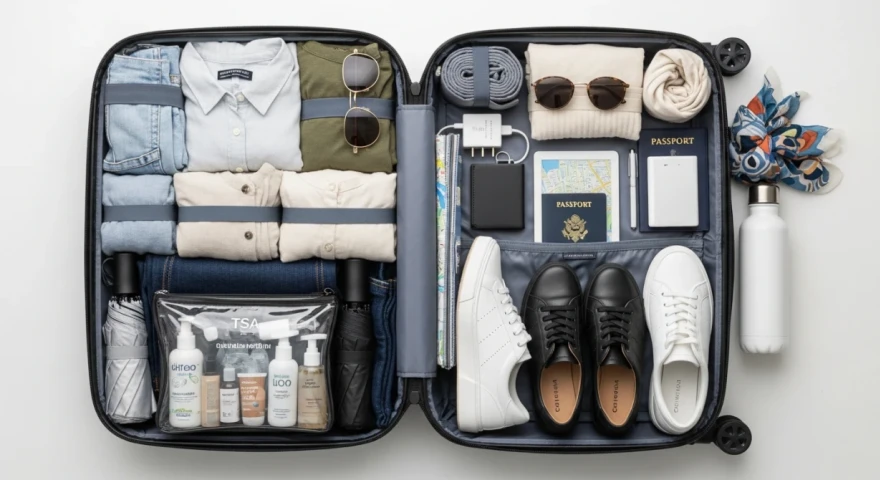
How to Pack for a European Rail Trip With a Smart Travel Rucksack
Pack for movement, not just the destination. Use one organized bag, limit duplicates, keep essentials accessible, and test the full load before you leave.
The fastest way to make a rail journey miserable is to bring too much and then drag it up station stairs, through narrow aisles, and across old cobblestones. That mistake is more common now because many travelers try to combine city breaks, work gear, and multiple weather options into one setup.
For how to pack for a European rail trip, the winning approach is simple: build one mobile system around a travel rucksack, keep every item easy to reach, and cut anything that does not earn its space by daily use.
Pack for the transfers, not just the destination. On rail trips, you carry your setup far more often than you expect.
Seasoned rail traveler guidance
🚆 Start here: when this packing workflow works and when it does not
This method works best for multi-city rail trips, weekend breaks with several hotel changes, and routes where you will move between stations on foot or public transit. It is especially useful when you want one main carry solution plus a small personal item, rather than a large case that needs constant lifting.
Do not use this exact workflow if your trip is built around formalwear, ski gear, or long stays in one place with private transfers. In those cases, a medium or large suitcase can be more practical because mobility matters less than volume.
- Use it if: you expect frequent boarding, short platform changes, hostel stairs, or day trips from a base city.
- Rethink it if: you need bulky shoes, business jackets that must stay crisp, or equipment that cannot be compressed.
- Best fit: travelers who value speed, hands-free movement, and easy access to documents, chargers, and toiletries.
🎒 Prepare your setup before you start filling it
Good packing starts before the first shirt goes in. You need one main bag, a clothing plan based on repeat wear, and a simple way to separate documents, liquids, tech, and laundry.
For rail travel, compact design and quick organization matter more than maximum capacity. Accessories that divide clothing, protect toiletries, and keep essentials near the top save real time during boarding and hotel check-in.
Choose the right main bag
A backpack-style carry option is usually the easiest choice for stations and transfers because both hands stay free. If you also need a laptop, a streamlined model with a dedicated compartment works better than a deep, shapeless bag.
| Model | Best use on a rail trip | Notable details from available specs |
|---|---|---|
| Bange 6801 14-Inch Laptop Backpack | Light city hopping with small tech load | Made for a 14-inch laptop, available in black and blue |
| Bange 6801 15.6-Inch Laptop Backpack | Longer itineraries with larger computer carry | Fits a 15.6-inch laptop, available in black and blue |
| Bange BG6800 Backpack | Balanced option for mixed leisure and work travel | Available in black and blue |
| Bange BG7529 Backpack | Urban rail trips where a cleaner silhouette matters | Available in black and grey |
| Arctic Hunter B00111C Business Laptop Backpack | Budget-friendly business-focused city breaks | Business laptop format in black |
| Bange FM230 Backpack | Heavier work setup with more structure | Black model designed for durable daily use |
If you prefer a smaller profile, a lightweight rucksack is easier to store above the seat or keep close in a crowded carriage. If your load will be mostly clothing and a few electronics, choose the slimmer laptop-oriented option over the larger-looking alternative.
Gather the accessories that actually reduce friction
Most overpacking problems are really organization problems. A few well-chosen add-ons let you carry less, find things faster, and avoid turning the whole bag upside down for one cable or toothbrush.
| Accessory | Why it helps on rail travel | Best moment to use it |
|---|---|---|
| Clothing organizers | Separate outfits by type and reduce creasing | Before departure and during hotel repacking |
| Hand luggage organizers | Keep documents, gadgets, and toiletries easy to reach | Security checks, boarding, and seat-side access |
| Travel bottles | Carry liquids in a smaller, hand-luggage-friendly format | Short trips and shared bathrooms |
| Travel adapter | Avoid carrying duplicate chargers or country-specific extras | Multi-country itineraries |
| Luggage tag and lock | Add identification and basic security during transfers | Stations, storage racks, and shared lodging |
| Travel pillow, sleep mask, earplugs | Improve rest on long train segments | Early departures and overnight movement |
- Required inputs: trip length, weather range, laundry access, laptop or no laptop, and how many hotel changes you will make.
- Optional accelerators: packing cubes, travel bottles, and a document pouch near the top of the bag.
- Decision rule: if an item is single-use and not essential for safety, work, or weather protection, leave it out.
🧳 Pack in sequence so the bag stays stable and easy to live with
The order matters. When you load by category without thinking about access, you end up digging for basics on platforms and repacking every morning.
- Set a clothing limit first: choose a small rotation of tops, bottoms, underwear, and sleepwear that can repeat. Build outfits around one shoe plan, not several style options.
- Pack the least-used items at the bottom: backup layers, sleepwear, and spare basics should sit lowest. This keeps the center of gravity steady and preserves top access for daily needs.
- Use organizers by function, not by day: one cube for tops, one for lower-body items, one pouch for underwear and socks. Function-based sorting makes hotel resets much faster than day-by-day bundles.
- Keep the top zone for fast access: documents, wallet, power bank, adapter, snacks, medications, and toiletries should be reachable in under ten seconds. If you need to unpack half the bag to find them, the layout is wrong.
- Create one transit pocket: dedicate a front or upper compartment to ticket, passport, phone cable, and earbuds. That single habit reduces the most common station scramble.
- Reserve a small space for the trip home: leave room for a damp layer, receipts, snacks, or one small purchase. A bag packed to the limit on day one becomes a problem by day three.
A compact rucksack works best when every compartment has a job. The goal is not to fit the maximum amount. The goal is to move through stations without stopping to reorganize.
🧠 Practical recommendations that make rail travel easier every day
- Dress your bulkiest layer: wear your heavier jacket or knitwear during transfers instead of forcing it into the bag.
- Reduce shoe count: one comfortable walking pair is usually enough for city-focused routes. Shoes eat space faster than shirts.
- Keep liquids minimal: refill small travel bottles instead of carrying full-size containers that add weight and clutter.
- Protect tech with structure: if a laptop is coming, use a bag designed for that size rather than wrapping the device in clothing.
- Separate clean from worn items early: one pouch or organizer for used clothing prevents the whole load from feeling chaotic after the first stop.
If you like a more polished look in cities, a crossbody can handle documents and the phone while the main pack stays overhead or on your back. For many travelers, that pairing feels more manageable than stuffing every quick-access item into one place.
✅ Verify the result before you leave home
A smart setup should pass a few practical tests before you ever reach the station. If it fails at home, it will fail harder when you are late for a connection.
- Lift test: pick up the full load with one hand and then wear it for ten minutes indoors. You should be able to climb stairs without shifting items around.
- Access test: retrieve your ID, charger, and toothbrush without opening every compartment. Daily essentials must stay quick to reach.
- Repack test: empty and reset your clothing organizers in under five minutes. Slow repacking means your internal layout is too complicated.
- Seat-space test: look at the overall depth. If it is overstuffed and bulging, it will be annoying on trains and in crowded aisles.
- Return-space test: confirm at least a little free room remains. Zero spare capacity usually means you packed for anxiety, not for the trip.
Success looks obvious. You can walk, board, store, retrieve essentials, and repack without stress or a full unpack on the floor.

🔧 If a step fails, use these fallback paths
Most problems show up in predictable ways. Fix the failure mode directly instead of trying to force the original plan.
| Problem | What it usually means | Fallback move |
|---|---|---|
| The load feels heavy after a short walk | Too many duplicates or bulky toiletries | Remove one spare outfit, cut shoe count, switch to smaller liquid containers |
| You cannot find essentials quickly | No dedicated access zone | Create one transit pocket for tickets, documents, cables, and medicine |
| Clothing comes out creased and messy | Loose packing without segmentation | Add organizers for tops, bottoms, and small items |
| The laptop shifts or feels exposed | Wrong bag type for tech carry | Use a laptop-focused backpack such as the 14-inch or 15.6-inch Bange 6801 |
| The bag is full before extras go in | No margin built into the plan | Repack around repeat wear and leave deliberate free space |
If you already know you will buy items during the journey, start with an even stricter base load. A lighter starting point is more useful than carrying an expandable problem from stop to stop.
🧭 Two realistic packing scenarios
Weekend city loop with laptop
A traveler moving between two cities over three days brings a 14-inch computer, a change rotation of clothes, travel bottles, and one set of sleep items. A laptop backpack like the Bange 6801 14-Inch keeps tech protected, while clothing organizers stop the rest of the load from collapsing into one compartment.
The result is fast boarding, easy café work sessions, and no need to open the whole bag during the day. This is the kind of trip where less volume gives more freedom.
One-week rail itinerary across several stops
Another traveler changes lodging every two nights and expects mixed weather. They use a laptop-capable backpack, a hand-luggage organizer for documents and chargers, a lock, a tag, and a small sleep kit for early departures.
Because the layout is built around repeat outfits and accessible essentials, hotel resets stay quick and station transfers stay manageable. The bag never becomes a storage problem on board because it was packed with movement in mind.
📝 Final take
Packing well for a rail journey is less about squeezing in more and more about building a system you can carry, access, and reset with little effort. Choose a streamlined main bag, divide items by function, and keep daily essentials at the top. Test the setup before departure, then fix any weak point while you still have the chance. If you need a practical bag or organizing accessories for your next route, threebirds is a good place to start.
Is a suitcase ever better than a backpack for rail travel?
Yes, if you are staying mostly in one place or carrying bulkier formalwear. Frequent station changes usually favor hands-free carry.
How do I know if I packed too much?
If the load feels tiring after ten minutes indoors or you cannot leave some free room, you probably included too many duplicates.
What should stay easiest to reach during the trip?
Keep documents, medications, charging gear, toiletries, and snacks near the top or in one dedicated transit pocket.
Are clothing organizers worth it for a short route?
Yes, because they speed up repacking and keep clean items separated from worn ones even on a brief itinerary.
Which bag setup works best if I carry a computer?
Pick a model built around your device size, such as the 14-inch or 15.6-inch laptop format, so the laptop stays stable and protected.
What is the biggest mistake with one rucksack on trains?
Filling it to maximum capacity on day one. A little spare space makes transfers, shopping, and repacking much easier.
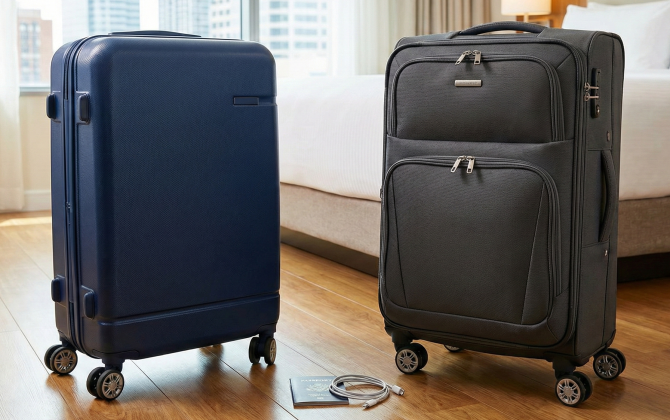
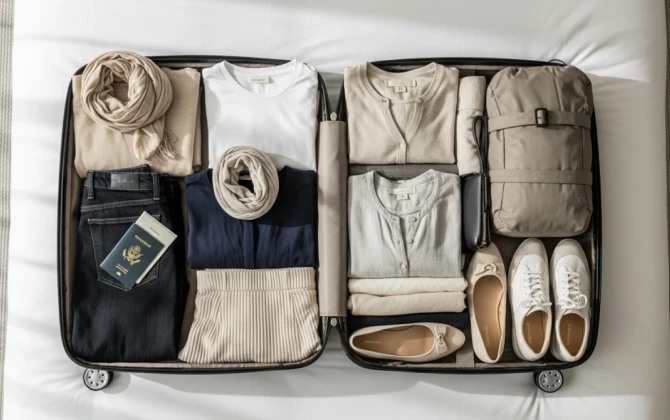 How to Build a Capsule Wardrobe for Travel That Works Anywhere in the World
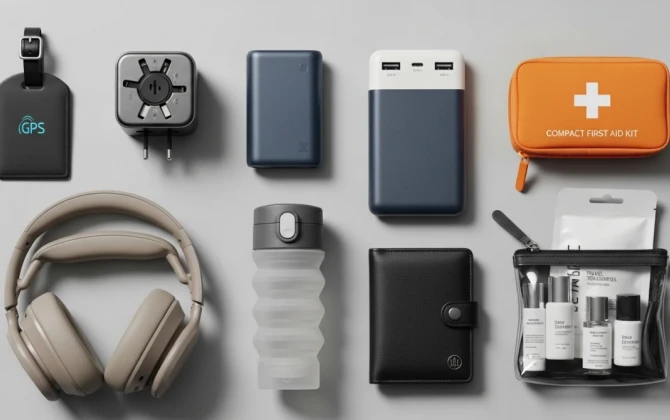 Travel Accessories Worth Packing in 2025: Essentials That Truly Upgrade Every Trip