
How to Tag Your Luggage So It Always Finds Its Way Back to You
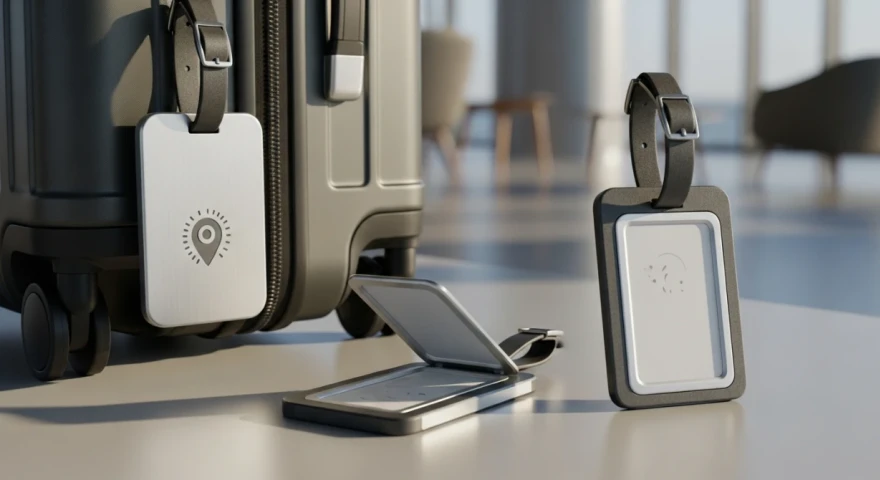
Use a readable outer tag, a backup contact card inside the case, and one clear visual marker such as a cover or strap. Update details every trip and remove old labels.
The most common tagging mistake is not forgetting a label. It is putting the wrong information on the outside, then assuming that is enough if a case gets pulled off a belt or separated during a transfer. Once travel gets busy, especially with more people using similar hard-shell suitcases and dark fabric bags, a generic tag becomes almost useless.
If you want a checked case to make it back to you, the goal is simple. Make your contact details easy for airline staff to use, make your bag easy to identify in seconds, and create a backup trail inside the case if the outer tag is ripped off. That workflow works better than relying on one decorative label alone.
🧭 When this workflow makes sense, and when it is not enough
Use this method any time your bag will leave your hands, especially for flights with transfers, group travel, cruise departures, rail changes, or hotel storage. It is most useful for checked cases, but parts of it also help with backpacks, duffels, and larger hand-carried items.
It is not a substitute for airline-issued baggage stickers, and it will not solve every loss scenario on its own. If you are carrying medication, passports, electronics, or anything you cannot replace quickly, those items should stay with you rather than depend on any external tag.
- Best use cases: Checked suitcases, family travel with similar bags, multi-stop itineraries, and busy holiday periods.
- Limited use cases: Very small personal items that never leave your sight.
- Not enough by itself: High-value essentials that should remain in your personal item or cabin bag.
🧰 What to prepare before you attach anything
Start with two identifiers, not one. You need an external tag that can be read quickly and an internal card that stays inside the case if the outer piece is torn away.
A few travel accessories can make this much more reliable. A suitcase cover helps prevent scuffs and makes a case easier to spot, while straps and locks add another layer of recognition and control. If you already use a suitcase organiser, place one contact card in the top compartment so it is visible as soon as the case is opened.
| Item to prepare | What it does | What to include or choose |
|---|---|---|
| Outer tag | Lets staff identify the owner fast | Full name, mobile number, email, destination city, optional hotel name for current trip |
| Internal contact card | Creates a backup if the outside label is lost | Same contact details plus itinerary note or return address |
| Distinctive visual marker | Helps you and staff spot the right case quickly | Cover, strap, or unique color cue that is easy to describe |
| Organized interior | Makes verification faster if a case is opened | Top layer with visible card, organized packing cubes or organizer sections |
- Required inputs: Your current mobile number, an email you actively check, and the address tied to this trip.
- Helpful accelerators: A bright cover, a luggage strap, and a clean packing layout that airline staff can inspect without creating confusion.
- Good timing: Prepare tags before departure day so you are not handwriting rushed details at the airport.
What information belongs on the outside
Put only what helps recovery happen fast. Your name and direct contact details matter more than a full home address, especially if you will be away for days.
For most trips, the strongest outside setup is your full name, mobile number with country code, and a monitored email. Adding your destination city or hotel can help during active travel, but update it for each trip rather than leaving old details in place.
What information belongs inside the case
The inside card should be more complete than the outside one. This is where you can add a home address, travel dates, and a second contact method.
If you use organizers for clothes, place the card in the top section so it is visible without unpacking the whole case. That is one of the simplest uses of travel accessories that actually improves baggage recovery instead of just convenience.
✍️ How to tag your case step by step
The best tagging setup uses one visible label, one hidden backup, and one fast visual signal. Follow the steps in order so each part supports the next one.
- Clean out old identifiers: Remove last trip’s airline barcodes, hotel ribbons, and outdated contact inserts. Old labels create sorting errors and make staff doubt which details are current.
- Create a readable outer label: Use clear printing or block letters. If staff cannot read it at arm’s length, it will fail when it matters.
- Keep the message practical: Include your name, mobile number, and email. Add destination details only for the current trip, then replace them before the next departure.
- Secure the tag firmly: Attach it to a handle point that does not twist excessively. A loose loop or weak clasp is the first thing to break during handling.
- Add an internal contact card: Put a second card just under the top layer, where it can be found in seconds. This protects you if the exterior piece is ripped away.
- Make the case visually distinct: Use a cover, strap, or another clear marker so your case is easy to describe. This matters because many suitcases look almost identical on a carousel.
- Match the outside to the inside: The name and core contact details should be identical in both places. Mismatched information slows down manual recovery.
A bag is easier to recover when ownership can be confirmed quickly from both the outside and the inside, without guessing which details are current.
Common airline baggage handling practice
🎯 How to make your case easy to identify, not just labeled
A readable tag helps staff contact you. A distinctive exterior helps them find the right item in the first place. You need both.
This is where luggage accessories earn their place. A suitcase cover protects the shell from scratches and also gives you an easy visual description, while straps and tags create a second cue when the belt is crowded with similar designs.
| Identification method | Main benefit | Possible drawback | Best use |
|---|---|---|---|
| Standard name tag | Direct contact route | Can tear off or be hard to read | Every checked case |
| Suitcase cover | Fast visual recognition and surface protection | Must fit securely to stay useful | Busy airports and dark-colored cases |
| Luggage strap | Easy to describe and quick to spot | Needs tight fastening | Soft-sided or plain designs |
| Internal card | Backup ownership proof | Not visible until case is opened | All checked items |
Choose one visual marker that is easy to describe in one sentence. “Black case with a blue cover” or “gray suitcase with a bright strap” works much better than saying your bag looks like everyone else’s.
🔍 How to verify that your tagging setup is good enough
Before leaving home, test the setup the way an airline worker would. If a stranger cannot identify and contact the owner quickly, improve it before check-in.
- Readability check: Stand an arm’s length away and confirm the name and number are easy to read.
- Durability check: Tug the attachment point lightly. If it slips or feels weak, replace or secure it again.
- Accuracy check: Call or text the number on the card to confirm it is current.
- Backup check: Open the case and verify the inner card is visible near the top.
- Recognition check: Ask another person to pick your case description from memory in one line.
Success looks simple. The outside details are current, the inside details match, the tag does not swing loose, and the case has one clear visual cue that would stand out on a belt.
⚠️ What to do if something in the process fails
If one part of the setup fails, do not scrap the whole system. Switch to the backup path that solves that exact weak point.
If the outer tag keeps breaking
Move it to a more stable handle point and reduce bulk on the loop. Then strengthen recognition with a cover or strap so the case is still easy to identify even if the label gets damaged.
If you do not want full address details exposed
Use your name, mobile number, and email on the outside, then place fuller trip and home details inside. That keeps recovery practical without broadcasting more than staff need at first glance.
If your case looks too ordinary
Add one strong external marker instead of several small decorations. A single bold cover or strap is easier to notice and describe than multiple tiny ribbons.
If you forgot to prepare before the trip
Create a simple contact card for both the outside and inside before check-in, even if it is temporary. A basic readable setup is far better than traveling with nothing attached.

🧠 Practical recommendations that make a real difference
Small changes improve recovery odds more than fancy gear. Focus on what helps staff identify ownership and contact you quickly.
- Update details every trip: Old hotel names and expired numbers are worse than no extra details at all.
- Use one primary phone: Choose the number you will actually answer while traveling.
- Keep the exterior simple: Too much text makes a tag slower to scan.
- Place a card at the top inside: Do not bury your backup under shoes or laundry.
- Pair tagging with organization: A neat interior using carry-on accessories or clothing organizers makes inspection faster if staff open the case.
🧳 Two realistic tagging scenarios
A traveler checks a plain black suitcase on a connecting flight. The external label has a current mobile number, the case has a bright cover, and a second contact card sits under the top layer inside. If the outer tag is damaged, staff still have a fast ownership trail and a clear visual description.
Another traveler uses an older bag with several expired barcodes and an outdated hotel tag still attached. Even if the case reaches the right airport, conflicting details make manual tracing slower because staff need to determine which information is current.
🛠️ Mistakes that quietly reduce your chances of getting a case back
Most failures are not dramatic. They come from small oversights that remove clarity at the exact moment someone needs to identify the owner fast.
- Leaving old airline stickers on: They can confuse routing and ownership checks.
- Writing too small: Tiny text fails in low-light or rushed handling conditions.
- Using only a decorative tag: Style does not help if the contact insert is flimsy or blank.
- Skipping the inside card: This removes your best fallback if the outer piece tears off.
- Choosing a common-looking case with no marker: Staff and travelers struggle to distinguish it from dozens of similar pieces.
🧩 Where this fits with the rest of your packing setup
Tagging works best when the rest of your packing is controlled. Accessories that organize documents, gadgets, and toiletries keep your travel flow cleaner, and the same logic applies to checked baggage. Clear structure reduces mistakes.
For travelers building a more reliable setup, threebirds offers practical travel accessories such as suitcase covers, straps, tags, locks, scales, and organizers designed to keep items protected and easier to manage. The goal is not more gear. It is fewer weak points.
A good example is combining an internal contact card with a top-layer organizer and an easy-to-spot cover. That combination improves recognition, speeds inspection, and gives you a backup route if one identifier fails.
Tagging your case properly is less about decoration and more about recoverability. Use one readable outer label, one internal backup card, and one visual marker that makes the case easy to describe. Check that all details are current before every trip, and remove anything outdated that could create confusion. If you want a cleaner travel setup, threebirds also carries practical add-ons that help protect, organize, and identify your case without overcomplicating it.
Should I put my full home address on the outside tag?
For many trips, your name, mobile number, and email are enough on the exterior. Keep fuller address details on the backup card inside the case.
What is the most important backup if the outer tag comes off?
An internal contact card placed near the top of the case gives staff a second way to confirm ownership. It should match the main details on the outside.
How can I make a plain suitcase easier to recognize?
Add one clear visual marker such as a fitted cover or strap. One strong cue is easier to describe than several small decorations.
Do clothing organizers help with recovery, or just packing?
They help with both when used well. A top compartment can keep your backup contact card visible the moment the case is opened.
What should I remove before each new trip?
Take off old baggage stickers, outdated hotel tags, and expired contact inserts. Mixed information creates avoidable confusion during manual tracing.
How do I test whether my tag is good enough?
Check that someone can read it from a short distance, that the loop feels secure, and that the phone number works. Then confirm the same details are also inside the case.
 How to Build a Capsule Wardrobe for Travel That Works Anywhere in the World
 Travel Accessories Worth Packing in 2025: Essentials That Truly Upgrade Every Trip