
Packing for a Cruise: What You Can and Can't Bring Onboard Without Stress
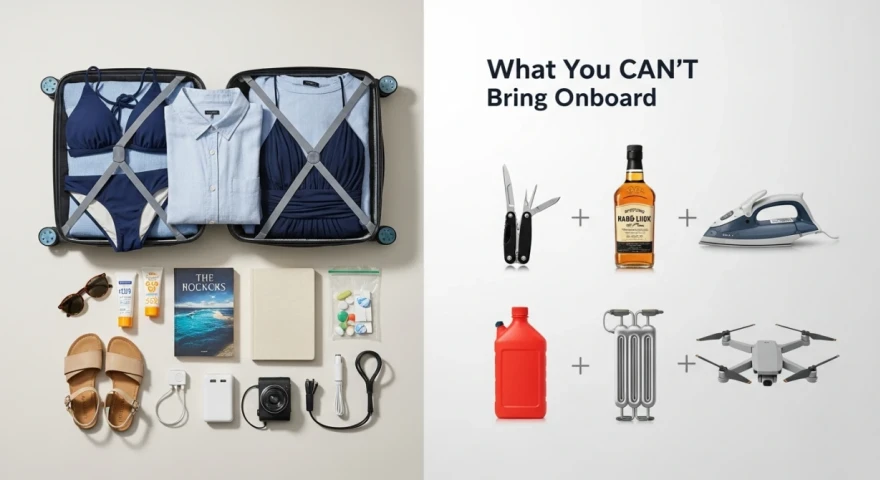
Pack normal clothing and essentials, but leave out irons, steamers, power strips, extension cords, marijuana, and CBD. A sealed 750ml bottle of wine or champagne is often allowed per person.
The item that catches people off guard is rarely the big suitcase. It is the small thing tossed in at the last minute, a steamer, a power strip, a CBD gummy, or a bottle that seemed harmless at home. Packing for a cruise matters more now because ships apply safety screening consistently, and a single restricted item can slow boarding or get removed before your trip even starts.
The safest approach is to pack by category, not by habit. Start with what the line is likely to permit, separate what is commonly restricted, and use compact bags and organizers so the check-in process stays simple instead of messy.
🧾 Who usually qualifies to bring an item onboard, and who does not
Most everyday clothing, shoes, toiletries in suitable containers, documents, chargers, and personal grooming tools fit within normal passenger use. That includes typical hair curling irons and straighteners, which are generally allowed even when heat-producing laundry tools are not.
The people who run into problems are usually not breaking rules on purpose. They are packing items that fall into high-risk categories such as fire hazards, unsafe electrical gear, banned substances, or alcohol outside the permitted limit.
- Usually acceptable: Clothes, sleep items, chargers, approved grooming tools, basic medications, and standard personal bags.
- Commonly restricted: Irons, garment steamers, extension cords, and power strips.
- Not eligible for boarding with you: Illegal drugs, including marijuana and CBD products, even if they are legal where you live or medically authorized elsewhere.
- Conditionally allowed: Wine or champagne when it is sealed, standard-sized at 750ml, and within the per-person limit that many lines apply.
Most cruise lines prohibit irons, steamers, extension cords, and power strips because they create safety risks. Illegal drugs, including marijuana and CBD products, are also strictly prohibited onboard.
What this means in practice
If an item plugs in, heats up, or changes legal status across locations, treat it as a red-flag item until you verify it. A flat iron for hair is typically treated differently from a clothes steamer, even though both use heat.
⚠️ Requirements, limits, and hard constraints before you zip the case
The fastest way to avoid check-in trouble is to sort every item into one of three groups: allowed, limited, or leave at home. That sounds basic, but it prevents the common mistake of mixing permitted electronics with prohibited power gear in the same pocket.
| Item category | Typical status | Relevant limit or condition | Why it matters |
|---|---|---|---|
| Wine or champagne | Usually allowed | One sealed 750ml bottle per person | Extra alcohol may be refused |
| Beer and spirits | Commonly prohibited | No standard passenger allowance stated here | Often stopped at screening |
| Iron | Prohibited | No passenger-use exception noted | Fire hazard |
| Garment steamer | Prohibited | No passenger-use exception noted | Fire hazard |
| Hair curling iron or straightener | Typically allowed | Pack securely and keep cords tidy | Usually treated as personal grooming gear |
| Extension cord or power strip | Commonly prohibited | Check line-specific exceptions if any | Electrical safety concern |
| Marijuana or CBD products | Prohibited | No exception based on local legality | Can create serious boarding issues |
Alcohol rules deserve special attention because travelers often assume a ship works like a hotel. It does not. A sealed bottle within the standard size limit may be acceptable, but beer and spirits are commonly not.
- Seal check: If the bottle is open, damaged, or transferred into another container, do not count on it being accepted.
- Volume check: Standard-sized means 750ml, not an oversized bottle.
- Per-person check: Pack the permitted bottle with the person who is claiming it, not loosely shared across multiple bags.
🎒 What to prepare before you start packing
Your packing plan should begin with the right container, then the right inserts. A structured suitcase plus a small personal bag is easier to screen and easier to live out of once you board.
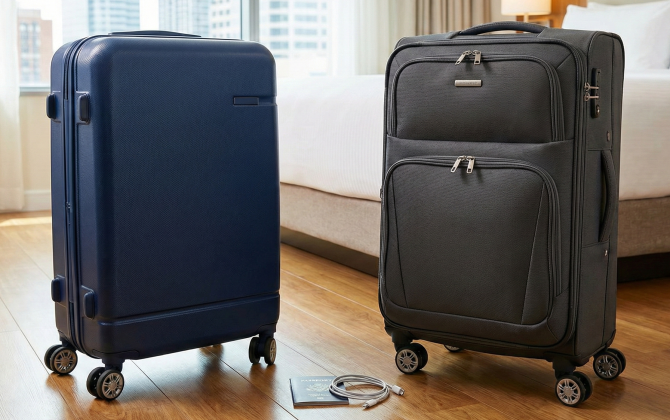
For the main case, hard shell and soft shell options both work. The better choice depends on what you are carrying and how much protection you need for fragile items, toiletries, and electronics.
| Option | Relevant features | Best use for cruise packing |
|---|---|---|
| Hard shell suitcase | Polycarbonate or ABS, lightweight, waterproof options, combination lock, telescopic handle, two or four wheels | Better for protecting breakable items and keeping shape in transfers |
| Soft shell suitcase | Flexible fabric exterior, wheeled design, lightweight construction | Useful when you want a bit more give while organizing clothing |
| Crossbody or long-strap bag | Hands-free carry, practical for city movement and travel | Good for embarkation-day essentials and documents |
| Backpack | Durable materials, sturdy fittings, contemporary design on listed models | Helps separate electronics, documents, and boarding-day items |
Required inputs and useful packing tools
Before you start, gather your boarding documents, ID, payment method, medication list, and any reservation details you need at check-in. Then build your loadout around compact travel accessories that make restricted items easier to avoid and essential items easier to reach.
- Suitcase organizers: Separate clothing by category and reduce rummaging in the cabin.
- Travel bottles: Move toiletries into small containers instead of packing oversized bathroom items.
- Tags and straps: Help identify your case quickly during boarding and transfer handling.
- Locks: Useful when your suitcase has a lock-ready design or integrated combination lock.
- Sleep items: A pillow, mask, and earplugs are practical if you want comfort during transit to the port.
If you want one compact travel bag for embarkation day, keep it limited to documents, medication, valuables, chargers, and one change of clothing. That separation keeps your personal items available even if your larger case reaches the cabin later.
For tighter organization, add carry-on accessories such as document pouches, toiletry cases, and small tech organizers. This reduces loose items at screening and prevents cables from tangling with cosmetics or grooming tools.
🛠️ Step-by-step setup flow for a clean boarding day
- Lay out everything by risk level: Make separate zones for definitely allowed, probably limited, and clearly prohibited items.
- Remove known problem items: Take out irons, steamers, power strips, extension cords, and any marijuana or CBD products before they reach your luggage.
- Pack alcohol correctly: If you are bringing wine or champagne, keep it sealed, standard-sized, and assigned to one traveler.
- Use internal organization: Place clothing in organizers, liquids in travel bottles, and cables in a dedicated pouch instead of scattering them across compartments.
- Build an embarkation bag: Keep documents, medications, valuables, and one charger in an easy-access personal item.
- Do a final screening pass: Check every zipped pocket and side sleeve, since restricted items are often forgotten in old compartments.
This is also where luggage accessories earn their place. A visible tag, secure strap, and simple lock setup save time when your case is handled with dozens of similar bags.

🚫 Typical failure reasons and a readiness checklist
Most packing failures come from assumptions. Travelers assume local legality applies at sea, that all heated tools are treated equally, or that any alcohol packed discreetly will be overlooked.
- Failure reason: Packing a steamer for formalwear. Better move: Pack garments carefully in organizers and choose pieces that recover well after hanging.
- Failure reason: Bringing a household power strip. Better move: Reduce devices and pack only the chargers you truly need.
- Failure reason: Tossing cannabis or CBD into a toiletry kit. Better move: Remove it completely before travel.
- Failure reason: Bringing the wrong type of alcohol. Better move: Stick to the sealed 750ml wine or champagne allowance when applicable.
Readiness checklist
- Documents ready: Boarding records, ID, and payment essentials are in your personal item.
- Restricted tools removed: No iron, steamer, extension cord, or power strip is hidden in any pocket.
- Substance check complete: No marijuana or CBD item remains in clothing, toiletry, or tech bags.
- Bottle rules verified: Any wine or champagne is sealed and standard-sized.
- Bag setup finished: Clothing is organized, valuables are separated, and the case is easy to inspect.
📦 Practical examples that show how this works
A couple packs one large hard shell suitcase and a backpack for embarkation. They move shoes and clothing into packing organizers, put toiletries into small bottles, keep documents in the backpack, and remove a power strip they nearly forgot. Result: faster screening and no need to unpack at the terminal.
Another traveler packs a formal outfit and adds a garment steamer at the last minute. The device is not allowed, so it is removed during screening. A better outcome would have been packing the outfit in a structured case, using organizers to reduce creasing, and hanging the garment as soon as they reach the cabin.
✅ Practical recommendations that save hassle
- Choose shape over size: A structured suitcase is easier to organize than an overstuffed soft bag full of loose items.
- Pack by function: Keep cabin-day needs separate from the rest of your clothing so you are not opening your full case right away.
- Treat every heating device differently: Hair tools are often fine, but clothing-care tools are where travelers get caught.
- Use small organizers instead of extra gadgets: Good compartmentalizing solves more cruise-packing problems than adding electrical gear.
- Audit old pockets: The most expensive mistake is often something left over from a previous trip, especially prohibited substances or restricted cords.
Good packing for a ship is less about bringing more and more about bringing fewer problem items. If your bags are easy to inspect and every item has a clear purpose, boarding tends to go smoothly.
Pack for the rules you will face at the terminal, not the habits you have at home. Keep prohibited items out, keep permitted essentials accessible, and use practical organizers so your first hour onboard feels simple instead of chaotic. If you need compact cases and smart bag options for that setup, threebirds is a sensible place to start.
Can I bring a clothes steamer on a cruise?
No, steamers are commonly prohibited because they are treated as fire-risk items.
Are hair straighteners and curling irons usually allowed?
Yes, those personal grooming tools are typically permitted even when irons and steamers are not.
How much wine can I usually take onboard?
Many lines allow one sealed 750ml bottle of wine or champagne per person. Beer and spirits are commonly not allowed.
Can I pack a power strip or extension cord?
Usually no. These items are commonly restricted for electrical safety reasons.
Do local marijuana or CBD laws make those products okay for a cruise?
No. Those products are strictly prohibited onboard regardless of local legality or medical authorization elsewhere.
What should stay in my personal bag on embarkation day?
Keep documents, medications, valuables, chargers, and one change of clothing with you instead of in your main case.
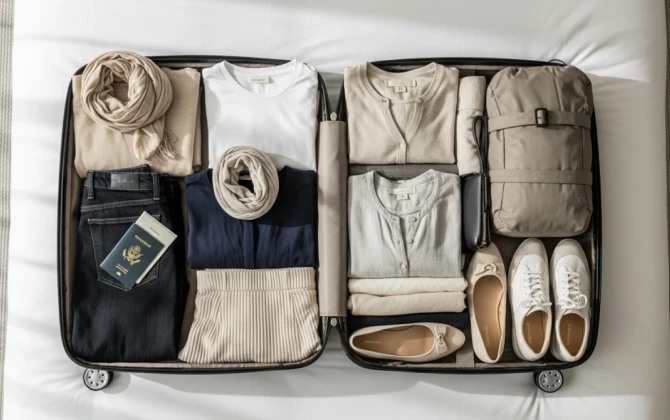 How to Build a Capsule Wardrobe for Travel That Works Anywhere in the World
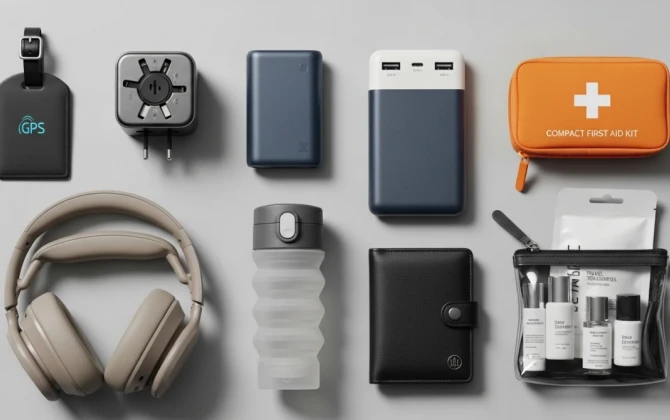 Travel Accessories Worth Packing in 2025: Essentials That Truly Upgrade Every Trip