
The Roll vs. Fold Debate: Which Packing Method Actually Works Better?
Rolling is best for soft casual clothes, folding is best for structured pieces, and a hybrid method usually works best for space and wrinkle control.
Most packing frustration comes from using one method for every garment. People roll everything to save space, then wonder why a dress shirt arrives creased, or they fold everything neatly and lose valuable room in a carry-on.
This is a luggage-packing decision problem, not a style preference. It matters to anyone trying to fit more into a case without turning unpacking into a steaming session, especially for mixed trips that include casualwear, business clothes, and under-seat essentials.
The practical answer is not choosing sides. It is matching the method to the fabric, the structure of the garment, and the shape of the bag or suitcase you are packing.
Which packing method works better overall?
Neither rolling nor folding is universally better. For most travelers, a hybrid approach works best because rolling saves space for soft casual items while folding protects shape and reduces wrinkles in structured pieces.
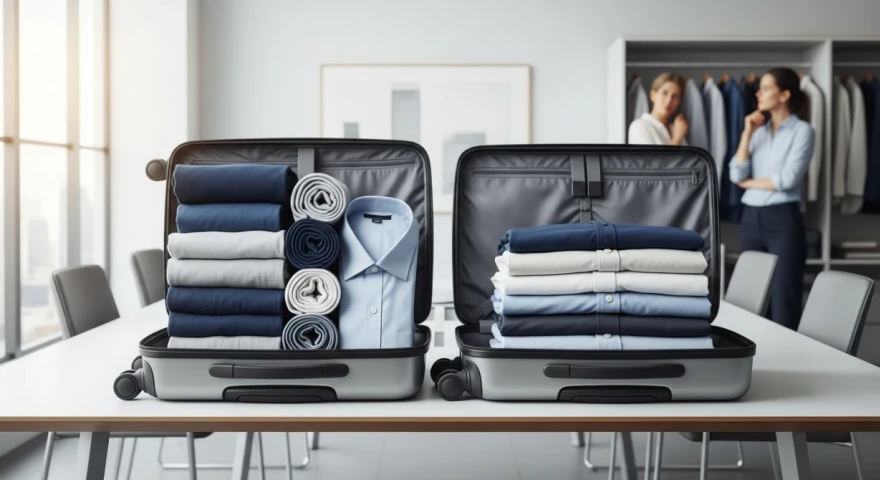
Use rolling for: t-shirts, leggings, pajamas, soft knits, and other flexible casualwear that compresses easily.
Use folding for: dress shirts, blazers, tailored trousers, jeans, and jackets that need shape support or stack better.
Use both together when: your trip includes different dress codes, you want to maximize suitcase capacity, or you are packing a cabin case and need clean item separation.
This is why the roll-versus-fold debate often feels confusing. Both methods are effective, but they solve different problems inside the same suitcase.
How does rolling actually work?
Rolling works best when the garment is soft, flexible, and easy to compress. In those cases, it can save about 15 to 20% more space than folding, and in some packing setups capacity gains can reach roughly 20 to 25% by reducing trapped air and empty corners.
The reason is simple. A rolled t-shirt or pair of leggings forms a compact cylinder that can fit into narrow gaps, line suitcase edges, and sit neatly inside organizers without wasting space between layers.
Soft fabrics respond well to this because they bend without fighting their own shape. That makes rolling especially useful for:
- Light tops: t-shirts and casual long-sleeve tops roll compactly and stay easy to sort.
- Stretch items: leggings and similar flexible pieces compress well with little bulk.
- Sleepwear: pajamas usually roll quickly and fill leftover spaces efficiently.
- Soft knits: unstructured knitwear often handles rolling better than rigid woven garments.
Wrinkles depend on how you roll, not just whether you roll. Tight, smooth rolls usually perform better than loose or overstuffed ones, while sloppy rolling creates pressure points and micro-creases that show up when you unpack.
Rolling becomes even more useful when the case interior helps keep those items in place. A well-laid-out suitcase with usable corners, stable compartments, and a shape that does not collapse under pressure makes rolled items easier to arrange, especially in suitcases designed in cabin, medium, and large sizes for different trip lengths.
How does folding actually work?
Folding works better for garments that need structure. It reduces stress on seams and helps structured items keep a flatter shape, which is why it is usually the safer option for dress shirts, blazers, and tailored trousers.
Instead of compressing the fabric into a rounded form, folding preserves cleaner lines. That matters when the item has collars, lapels, creases, padding, or a cut that looks better when laid flat.
Folding also helps with heavier garments that form the base of the suitcase. Jeans and jackets may not save much room when rolled, but they stack well and create a more stable platform for lighter items above them.
Use folding when polish matters more than pure compression. If you are packing for meetings, dinners, events, or any trip where you do not want to iron on arrival, a few careful folds will do more for appearance than rolling everything into tubes.
The good news is that folding does not need to slow you down. Most travelers only need to fold a small set of problem garments well, then roll the rest.
How do rolling and folding compare side by side?
Rolling wins on space for soft casualwear, while folding wins on shape control for structured garments. The better method changes with fabric, bulk, and how neatly you need the item to arrive.
| Criteria | Rolling | Folding |
|---|---|---|
| Space efficiency | Usually better for soft items. Often saves about 15 to 20% more space, with higher gains possible when air pockets are reduced. | Less compact for thin casualwear, but useful for stacking larger pieces cleanly. |
| Wrinkle risk | Low for casual knits and stretch fabrics when rolled smoothly. Higher for structured pieces if rolled tightly. | Usually lower for dress shirts, blazers, and tailored garments because shape is preserved. |
| Best garment types | T-shirts, leggings, pajamas, soft knit layers. | Dress shirts, blazers, tailored trousers, jeans, jackets. |
| Speed and ease | Fast once you know the rhythm. Good for high-volume casual packing. | Slightly slower, but only essential for a few key items on most trips. |
| Suitcase layout effect | Excellent for filling corners, side gaps, and organizers. | Excellent for building a flat base and top layer. |
| Best use case | Casual trips, carry-on packing, flexible fabrics. | Business travel, mixed wardrobes, bulkier or structured items. |
A simple rule helps. If the garment naturally bends and springs back, rolling is usually efficient. If the garment has shape you want to preserve, fold it.
When does each method win in real travel scenarios?
Rolling wins on casual, space-sensitive trips. Folding wins when clothing needs to look sharp on arrival, and mixed trips call for both methods in the same case.
Weekend casual trip
Use mostly rolling. A short leisure trip usually includes tees, knit layers, leggings, underwear, and sleepwear, which are ideal for compact rolls.
This is where a cabin-size suitcase or a travel rucksack can benefit from every bit of reclaimed space. Rolled casual items also make it easier to see what you packed instead of digging through flat stacks.
Business trip
Use mostly folding, with rolling reserved for basics. Dress shirts, a blazer, and tailored trousers should stay flat, while socks, sleepwear, and casual tops can fill the remaining gaps.
If your work trip includes a personal item, keeping documents and in-transit items separate from your main clothing load helps preserve order. For that role, our bags category includes practical crossbody, shoulder, tote, and travel-friendly options that keep essentials out of the main case.
Mixed business and leisure trip
This is the most common scenario, and it is where people overcomplicate the decision. Fold the few garments that need to look polished, roll the rest, and treat the suitcase as zones rather than one big pile.
A coordinated luggage set can help here because it gives you a cleaner split between main clothing, overflow items, and shorter side trips. That matters when one part of the trip is formal and another is casual.
Carry-on only trip
Rolling matters even more in a small case, but folding still has a place. The space gains from rolled soft clothing can be the difference between fitting everything in a cabin case and having to cut outfits, while one or two folded shirts keep the wardrobe usable for smarter settings.

What is the best hybrid packing method?
The best method is to roll soft casuals, fold structured or bulky pieces, and pack the suitcase in layers. Put heavier folded items at the base, then fit rolled items around and above them to use corners and reduce shifting.
This is the simplest formula to remember:
- Start with shoes and heavier base items: place them first so the suitcase has a stable foundation.
- Fold structured garments: lay in dress shirts, blazers, tailored trousers, jeans, or jackets as flat layers.
- Roll soft items: add t-shirts, leggings, pajamas, and soft knits in rows or columns.
- Use the edges and gaps: slot smaller rolls beside folded stacks and around shoes.
- Keep top-access items separate: reserve a small section for the first outfit, undergarments, or overnight basics.
If you use organizers, treat them as job-specific tools rather than extra clutter. Clothing organizers divide categories and help prevent creasing by keeping items from sliding into each other, which is why our travel accessories selection is useful for separating clothes, toiletries, documents, and tech within the same trip.
For mixed wardrobes, try this suitcase layout:
- Bottom layer: folded jeans, jacket, or tailored trousers.
- Middle section: rolled casual tops, sleepwear, and stretch items.
- Top layer: folded shirt or blazer that you want easiest to remove first.
- Corners and sides: socks, underwear, and small rolled accessories.
- Personal item: passport, chargers, and a rucksack for a laptop or crossbody bag for in-transit essentials.
This method answers the most common objection to folding taking too long. You are not folding everything. You are protecting only the garments that genuinely benefit from it.
What hidden trade-offs make either method fail?
Bad results usually come from poor matching, poor placement, or poor luggage layout rather than from the method itself. Rolling fails when structured clothes are compressed too hard, and folding fails when the case is overstacked or unstable.
Here are the mistakes that cause most disappointment:
- Rolling every garment the same way: a tee and a blazer do not respond to pressure equally.
- Making rolls too tight: excessive pressure can create crease lines in items that would have packed better flat.
- Leaving folded layers unsupported: if the suitcase interior shifts, flat stacks buckle and wrinkle.
- Ignoring luggage shape: old, sagging, or awkward interiors waste corners and reduce the benefits of both methods.
- Putting in-transit items in the main clothing area: toiletries, chargers, and documents can disrupt clothing layers and add pressure where you do not want it.
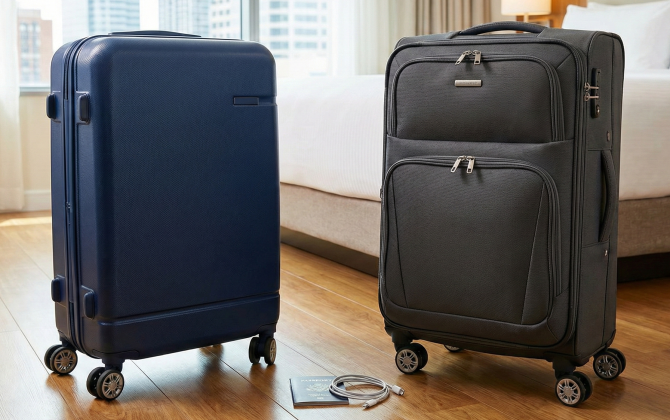
This is also where luggage choice stops being cosmetic and starts being practical. Hard shell cases can help maintain external shape and protect packed layers, while soft shell cases offer flexibility that some travelers prefer when fitting bulkier loads. Cabin, medium, and large formats each change how much rolling helps, because smaller interiors reward tight use of corners and larger interiors benefit more from stable layered zones.
If your current case always feels cramped or messy, the problem may not be your technique. A better-proportioned suitcase interior, a matching set for trip length, and separate accessories for categories often make both rolling and folding work more reliably.
How do you decide quickly before your next trip?
Use a simple checklist. If most of your wardrobe is soft and casual, lean heavily on rolling; if several items are structured or formal, keep folding for those pieces and build a hybrid layout.
- Check garment mix: more t-shirts and knitwear means more rolling; more shirts and tailoring means more folding.
- Check trip purpose: leisure favors compression, business favors wrinkle control.
- Check luggage size: smaller cases gain more from rolled casualwear, while larger cases can support layered hybrids more easily.
- Check your bag setup: if you have a separate personal item, keep travel-day essentials out of the main clothing compartment.
- Check your case condition: if the interior is awkward or worn, method alone will not solve the problem.
If you are ready to make this easier next time, the practical next step is to choose the case size and layout that match how you actually pack, then add the accessory or personal bag that keeps clothing organized instead of crowded.
The real winner in the roll versus fold debate is the traveler who uses both with intention. Roll soft casual items for space, fold structured pieces for shape, and build your suitcase in layers so each item has the right kind of support. That gives you a repeatable packing system instead of a guess. Explore threebirds suitcases, luggage sets, and travel bags to build that system around the trips you actually take.
Does rolling always save more room than folding?
No. Rolling usually saves more room for soft casual clothing, but bulkier or structured items often stack better when folded.
Why do rolled clothes sometimes come out wrinkled?
Wrinkles usually come from over-tight or uneven rolls. Smooth rolling works best on flexible fabrics, not on tailored garments.
Should I fold jeans or roll them?
Jeans are often better folded when you want a stable suitcase base. If space is tight, they can be rolled, but they do not gain as much as lighter casualwear.
Is the hybrid method useful for carry-on travel?
Yes. It helps you use limited cabin space efficiently while still protecting one or two smarter pieces from unnecessary creasing.
What belongs in a personal item instead of the main suitcase?
Keep documents, chargers, gadgets, and other in-transit essentials outside the clothing compartment. That prevents clothing layers from being disturbed every time you need something.
Do organizers help with both methods?
Yes. Organizers keep rolled items contained and folded pieces separated, which reduces shifting and helps clothing stay neater during travel.
What if my suitcase is the reason packing never works well?
An awkward or worn interior can limit both methods. Better case proportions and separate accessories often improve results more than changing technique alone.
 How to Build a Capsule Wardrobe for Travel That Works Anywhere in the World
 Travel Accessories Worth Packing in 2025: Essentials That Truly Upgrade Every Trip